


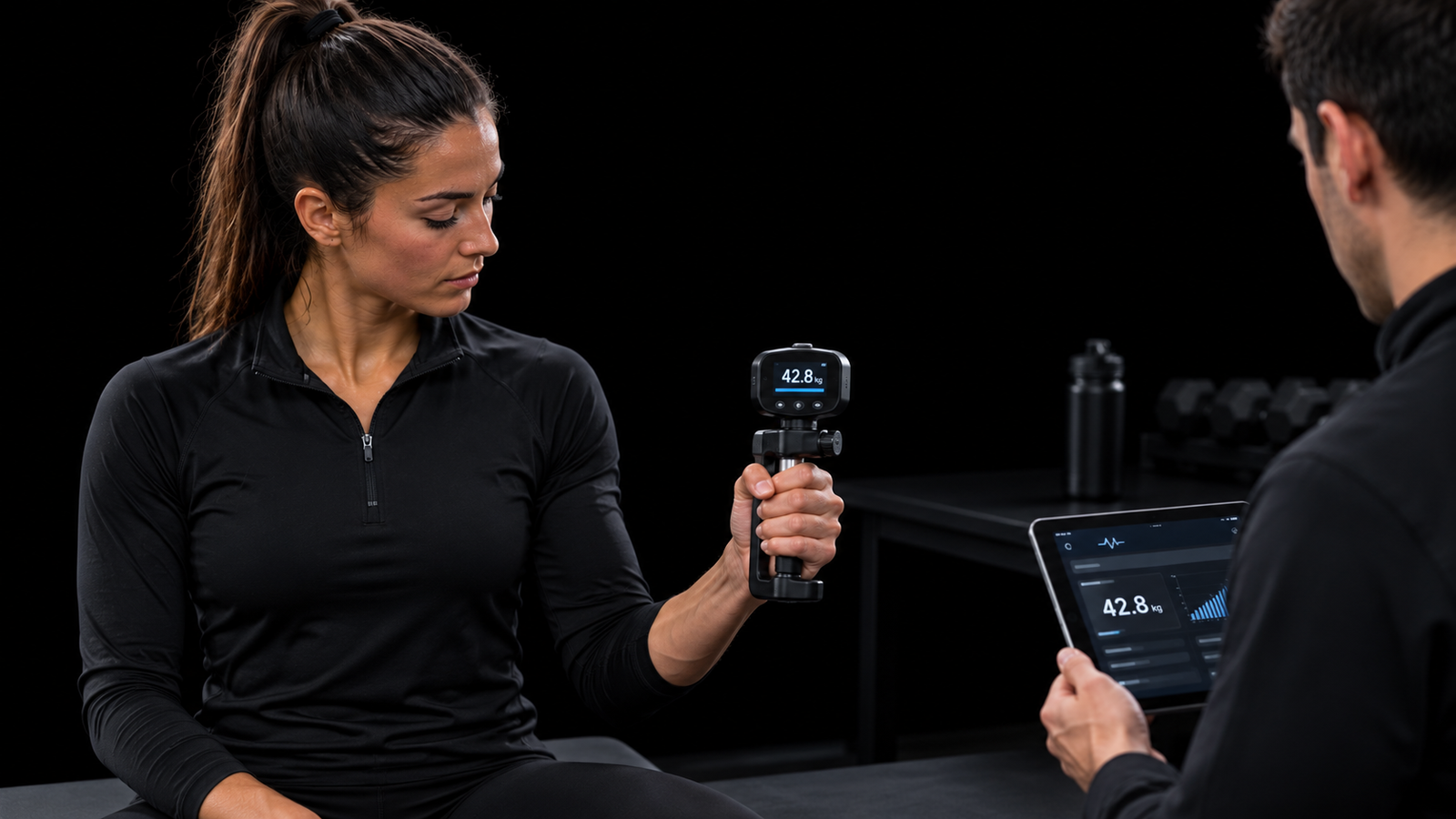
Neuromuscular Grip Dynamometry: Systemic Neuromuscular Integrity
Isometric handgrip dynamometry serves as a validated diagnostic marker of overall neuromuscular integrity, functional upper-limb strength, and physical longevity. Handgrip capacity reflects central nervous system motor unit recruitment and correlates inversely with frailty, functional decline, and cardiovascular risk.
AZM Performance Lab utilizes the Charder MG4800BT Digital Handgrip Dynamometer, an assessment tool built with medical load cells and interchangeable resistance springs spanning 20 kg to 130 kg, maintaining an accuracy tolerance of 0.1 kg (100 grams). The device links directly via digital telemetry to eliminate parallax reading errors common to mechanical hydraulic gauges.
Diagnostic Modes & Applications
- Peak Maximum Mode: Measures absolute isometric force production in kilograms or pounds, identifying peak voluntary neuromuscular output.
- Average Mode: Evaluates bilateral symmetry between the dominant and non-dominant upper limbs, highlighting functional asymmetries, unilateral deficits, or rehabilitation progress.
- Count Mode (Endurance Profiling): Measures the number of sustained repetitions executed above a predetermined target force threshold, evaluating peripheral grip endurance and central motor drive fatigue resistance.
- Sports-Specific & Longevity Applications: Provides quantitative performance data for racket athletes (such as padel and tennis players), combat athletes, and strength and tactical personnel, while serving as a biological vitality metric for health optimization.
The complete evaluation takes under 10 minutes, generating immediate digital force curves, demographic percentile rankings, and targeted training recommendations to resolve functional imbalances and build grip endurance.
Towards A Better Lifestyle
Contact Us At:
+974 7082 2568
Email:
Drnidhal@azmperformancelab.com
©2026. AZM. All Rights Reserved.
Towards A Better Lifestyle
Contact Us At:
+974 7082 2568
Email:
Drnidhal@azmperformancelab.com
©2026. AZM. All Rights Reserved.